
 St. Louis, MO &
  View Discounts
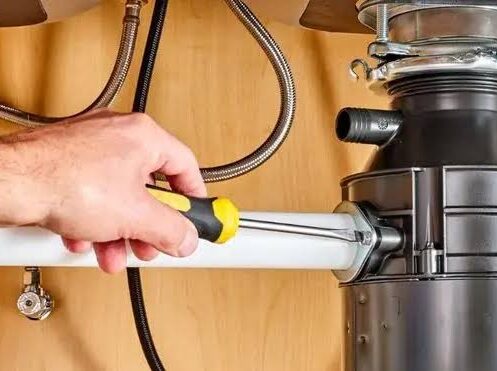
Because garbage disposals involve a motor, plumbing, electricity and moving parts, there’s a lot that can go wrong. You can fix some issues on your own, while others require a professional repair or replacement. But before you call a plumber, go through our garbage disposal repair and troubleshooting process to see if you can identify the cause and find a solution.
Common Garbage Disposal Repairs
When your garbage disposal isn’t working, start by identifying the issue. Then, you can figure out what steps you need to take to fix it.
Here are a few common garbage disposal problems and how to troubleshoot them.
Garbage Disposal Won’t Turn On
If your garbage disposal doesn’t make any sound or movement when you flip the switch, it’s usually because it’s not getting electricity.
Take these steps to figure out what’s happening:
- Check the reset button: When something goes wrong with the garbage disposal, such as an overheating incident or a jammed impeller, the system may reset to protect itself. Turn the switch off, and push the reset button until it clicks (it’s usually located on the bottom of the garbage disposal housing). Then, test the disposal.
- Check the breaker: When an appliance overloads the circuit in your kitchen, it can trip the breaker. Look at your electrical panel to see if the garbage disposal’s breaker switch is in the “off” position. If so, flip it to the “on” position and test the garbage disposal.
- Check the power cord: If your garbage disposal plugs into the wall, make sure the cord is still securely plugged into the outlet.
- Inspect the outlet: If everything else is working, the outlet may be to blame. Try plugging another device in to see if power is flowing freely. If not, you’ll probably need to call a professional to test and repair the wiring.
Garbage Disposal Doesn’t Grind
If your garbage disposal makes noise when you turn it on but doesn’t grind the food, it could be jammed.
Here’s how to deal with a garbage disposal jam:
- Turn off the power: You can either flip the switch into the “off” position or cut the power at the breaker box.
- Check the drain: Look into your sink drain to see if anything is stuck in the garbage disposal impeller. Food can get wedged into the components, which stops the plate from spinning. Use a flashlight if necessary. You can use pliers or kitchen tongs to pull out stuck food safely; never put your hands near the disposal.
- Release the blades: Get a hex key, and insert it into the small hole at the center of the disposal’s underside. Twist it until you feel the impellers rotate freely. You might need to move it back and forth to release the food that’s blocking the movement.
- Reset the disposal if necessary: Sometimes, the garbage disposal will trip the reset switch after a jam. Press the reset button to restore power.
- Test the disposal: Once the jam clears, turn on the disposal to see if it spins normally.
Garbage Disposal Clogs
When your garbage disposal gets clogged with food, the sink might drain slower than usual. If this happens, wait for all the liquid to drain. If the clog is serious, you might need to scoop out the water. Then, follow the steps above to help the impellers rotate freely again.
If the garbage disposal is working, but the sink is still draining slowly, follow these steps to clear the drain:
- Run hot water into the sink for about 60 seconds.
- Allow the water to drain, and pour ½ cup of baking soda down the drain.
- Pour 1 cup of vinegar down the drain and wait 15 minutes.
- Run hot water for 30 to 60 seconds to flush the lines.
This process also helps deodorize your drains. If you’re still dealing with slow draining, it might be time for a drain cleanout.
Garbage Disposal Is Leaking
Are you noticing water under your sink or on the garbage disposal itself? There’s probably a leak in the system. If you’re comfortable with basic plumbing or ready to learn, this is often a manageable DIY garbage disposal repair.
Here’s how to troubleshoot leaks:
- Find the leak: Turn off the power, and allow the disposal to dry. You might need to use a towel to wipe down the housing under the sink. Run the water, and inspect the disposal to see where the leak is located.
- Replace or tighten parts: If the water is leaking from loose or worn seals, gaskets, bolts, pipes or clamps, try tightening or replacing the part.
- Reseal the drain connection: When water is leaking near the top of the garbage disposal, it could be due to a worn drain seal between the flange and the sink. Turn off the power, disconnect the disposal, remove the worn plumber’s putty and add a new layer. Then, you can reassemble the unit.
- Replace the disposal: If the leak is located near the bottom of the garbage disposal housing, it’s usually coming from inside the device. When this happens, you likely need a new unit; it’s not typically possible to fix internal leaks. A professional plumber can verify if this is necessary.
When to Call a Professional to Fix a Garbage Disposal
If you’ve gone through all the troubleshooting steps above and your garbage disposal still isn’t working, it’s time to schedule a professional garbage disposal repair.
Do you live in the St. Louis area? Contact Anton’s experts today.
Our professionals can examine your garbage disposal and find the cause of the problem. Whether you’re dealing with a leak or a jammed impeller, we can get your system moving again.


