
 St. Louis, MO &
  View Discounts
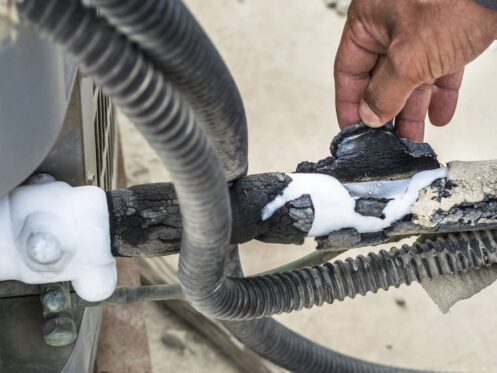
Refrigerant leaks can be frustrating because the early signs are easy to brush off. You might hear a hiss near the unit, notice ice where it shouldn’t be or realize the system is running longer than usual. Refrigerant doesn’t simply vanish when your AC is working properly, so a leak usually points to a real issue that needs professional attention.
What Is a Refrigerant Leak?
A refrigerant leak means your air conditioner unit is leaking cooling fluid. Your AC needs refrigerant to pull heat out of your home. When some of it leaks out, your system can’t cool your house properly. As such, refrigerant leaks signal something more serious than a drop in performance. It usually means something inside the AC is no longer holding refrigerant the way it should.
How to Spot a Refrigerant Leak
A refrigerant leak usually shows up through changes you can hear, see or feel around your AC:
- Hissing or bubbling sounds near the unit
- Ice or frost on the refrigerant line or indoor coil
- Longer run times without the house getting as cool as it should
- Cooling that gets weaker over time
- Warm air coming through the vents while the AC is running
- Higher energy bills without a clear reason
- The same cooling issue keeps coming back, even after you thought it was fixed
On their own, those signs don’t all prove the same thing, but together they can point you in the right direction. Hissing, recurring ice, repeated low refrigerant and longer run times are worth taking seriously.
What Can You Check Before You Call for an AC Repair?
Before you call for repairs, you can check a few simple things that may help you spot the problem:
- Check the air filter and replace it if it looks dirty. A clogged filter can restrict airflow and make your AC act like something bigger isn’t right.
- Look for ice on the refrigerant line or around the indoor unit. Ice is a sign that something’s off, and it’s worth mentioning when you schedule service.
- Listen for hissing or bubbling sounds near the unit. Those sounds can point to refrigerant escaping somewhere it shouldn’t.
- Look around the outdoor unit for leaves, grass or other debris. Blocked airflow can strain the system and make cooling problems harder to sort out.
- Think about when the problem started and whether it keeps getting worse. That timeline can help you explain what you’ve noticed instead of just saying the AC isn’t working.
- Notice whether the same issue keeps coming back after attempted fixes. Repeating problems might indicate that the root cause wasn’t fully addressed.
Can You Fix a Refrigerant Leak Yourself?
Usually, no. You can notice the warning signs, check the filter and clear debris around the condenser, but fixing a refrigerant leak isn’t a basic homeowner task. The leak has to be located, repaired, tested and recharged correctly to determine whether the system still needs refrigerant.
Since refrigerant is escaping somewhere it shouldn’t, a trained technician should handle the process. If the issue isn’t an AC refrigerant leak, you might be able to take some simple steps toward preparing your unit for the next season.
What Does Air Conditioner Refrigerant Leak Repair Usually Involve?
Air conditioner refrigerant leak repair looks like this:
- The technician finds the source of the leak.
- They repair or replace the leaking part.
- They test the repair to make sure it’s holding.
- The system is recharged if it still needs refrigerant.
Does Your AC Just Need More Refrigerant?
If your AC is low on refrigerant, that often means there’s a leak somewhere in the system. Refrigerants don’t get used up like fuel, so low levels usually point to a problem that needs fixing. Adding more refrigerant may help temporarily, but it usually won’t solve the underlying issue.
If the leak is still there, the same problem will likely come back. The better fix is to find the leak, repair it and add refrigerant only if the system still needs it. That helps you avoid repeat issues and extra repair costs later.
When Should You Schedule an AC Service?
It’s time to schedule AC service when the problem keeps returning, keeps getting worse or starts affecting how your home feels day to day:
- Your AC runs and runs without reaching the temperature you set: Long run times usually mean the system is working harder than it should while falling behind on cooling and needs to be serviced.
- The house feels sticky even when the AC is on: Your air conditioner should help pull moisture out of the air. When your home starts to feel muggy and uncomfortable, cooling performance may be slipping, and the AC unit may need attention.
- Ice comes back after the system has thawed: Recurring ice is a sign that the root problem is still there, even if the system seems better for a short time.
- The breaker trips more than once while the AC is running: That can point to strain somewhere in the system, and it’s not something to brush off or keep resetting without a closer look.
- The same issue has happened before: When a cooling problem keeps returning after earlier work, it could mean the original cause was never fully resolved.
If the signs keep pointing to a refrigerant leak, getting the problem checked and repaired early can help you avoid a bigger repair later.


