
 St. Louis, MO &
  View Discounts
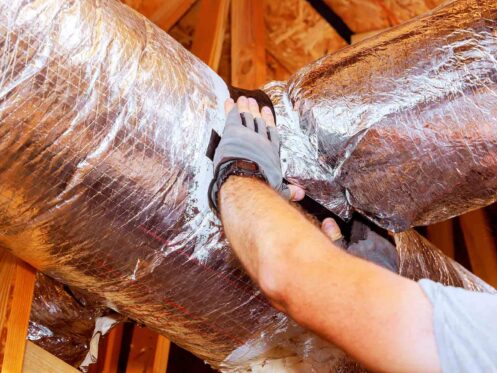
If one room is hot while another is freezing, leaky air ducts may be to blame. Small gaps and cracks in your HVAC ducts can allow cool air to escape before it reaches your vents, forcing your air conditioner to work harder during hot, humid St. Louis summers.
The U.S. Department of Energy estimates that the average American wastes $200 to $400 per year due to drafts, leaks and outdated cooling systems. Duct sealing counteracts these problems, increasing energy efficiency and saving you money.
How Do Leaky Ducts Affect Cooling?
Ducts move cool air from your HVAC system to the individual rooms in your home. When they develop leaks, cool air escapes into attics, basements, crawl spaces and other areas where it isn’t needed. As a result, your living spaces may stay warm, even if you run your air conditioner constantly.
Common signs of duct leaks include:
- Weak airflow from vents
- Hot and cold spots throughout your home
- Excessive dust levels
- High cooling bills
- HVAC system running more than usual
Many people assume poor airflow means they need duct cleaning, but dirt and dust buildup isn’t always the main issue. You might have leak-related air loss.
The Importance of Professional Duct Inspection
Before choosing a repair method, it’s important to understand exactly how much air you’re losing.
A professional HVAC technician can inspect your ductwork for:
- Damaged seals
- Loose ducts
- Cracks or gaps
- Restricted airflow
- Poor insulation
This step helps determine whether you need traditional duct sealing or Aeroduct sealing.
Traditional Duct Sealing vs. Aeroseal Duct Sealing
Traditional duct sealing involves using foil-backed HVAC tape, mastic sealant or mechanical fasteners to manually seal visible leaks. This method works well when leaky ducts are easily accessible. However, many leaks occur inside ceilings, walls or other hard-to-reach areas, making manual repairs difficult.
Aeroseal duct sealing involves sealing leaks from the inside of the duct system. Instead of crawling through tight spaces or opening walls, technicians use aerosolized sealant particles to prevent air loss.
This process typically includes these steps:
- Seal off the registers: Technicians block the supply and air return vents in your house. This prevents the sealant particles from entering your living spaces.
- Pressurize the duct system: Pressurization allows technicians to measure leaks.
- Seal leaks: As air escapes, sealant particles collect around duct openings. Eventually, the gaps close, preventing air loss. This makes it possible to reach small cracks and holes deep within the duct system.
Benefits of Aeroseal
The Aeroseal process has several benefits, including:
- Lower energy costs
- Better cooling performance
- Reduced dust
- Improved comfort
What Factors Influence Aeroduct Sealing Cost?
Before you schedule service, it’s helpful to understand what factors influence the cost of duct sealing. Prices vary based on the size of your home, the complexity of your duct system and the amount of leakage. We also consider accessibility and system layout. It typically costs more to seal the ducts in a large home.
Is Aeroseal Right for Your Home?
Aerosol may be right for your home if you’re dealing with:
- Older ductwork
- Uneven cooling
- Persistent airflow issues
- High utility bills
- Hidden ductwork in ceilings or walls
St. Louis homes often experience high cooling demand at the height of summer, making Aeroseal duct sealing a worthwhile investment.
Keep Your St. Louis Home Cool
Leaky ducts can quickly reduce your comfort and drive up your summer utility bills. While duct cleaning improves airflow in some situations, it’s not always the right solution. It only works if your airflow issues are the result of debris buildup in your ductwork.
If you’ve been struggling with uneven airflow or rising utility costs, call Anton’s to schedule a duct inspection. We’ll do everything in our power to give you total comfort this summer.


